

Sustainable Elevators: Materials, Design & Technology for Green Buildings
When people talk about green buildings, elevators are rarely the first thing that comes to mind.
Solar panels, lighting efficiency, water management—these usually take center stage. Yet elevators operate every day, across decades, consuming energy, using materials, and influencing how efficiently people move inside a building.
That makes elevators a quiet but powerful contributor to sustainability.
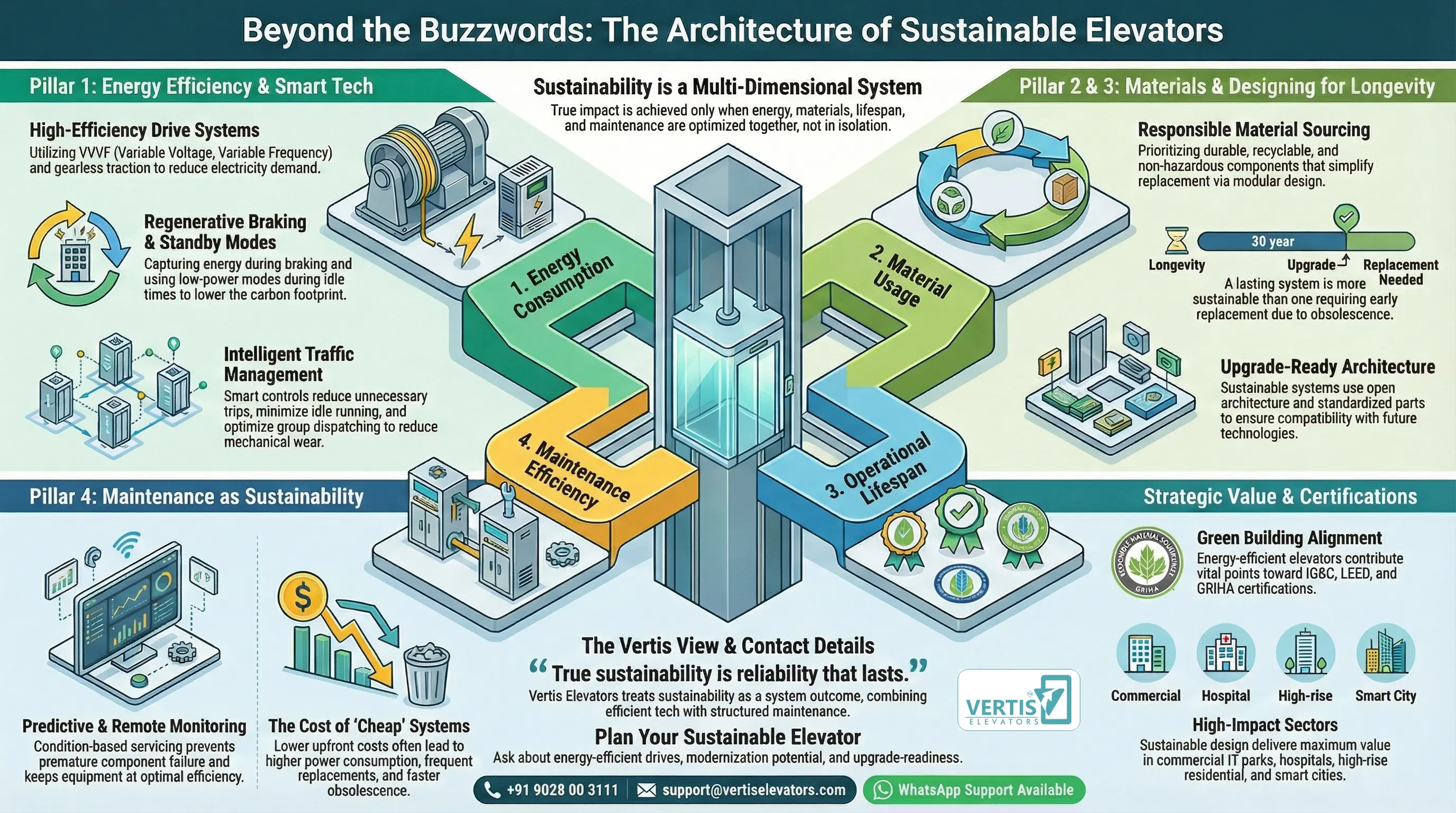
Sustainable elevators are not about buzzwords. They are about long-term efficiency, responsible design, and reduced environmental impact over the entire lifecycle.
What Makes an Elevator “Sustainable”?
A sustainable elevator is not defined by a single feature.
It is defined by how responsibly it performs across four dimensions:
- Energy consumption
- Material usage
- Operational lifespan
- Maintenance efficiency
Sustainability is achieved when all four work together, not when one is optimized in isolation.
Energy Efficiency: The Most Visible Impact
Energy use is the most measurable sustainability factor.
Modern sustainable elevators focus on:
- High-efficiency drive systems (VVVF, gearless traction)
- Regenerative braking
- Intelligent traffic management
- Low-power standby modes
Over time, these features:
- Reduce electricity demand
- Lower carbon footprint
- Decrease strain on building infrastructure
For high-traffic buildings, energy-efficient elevators can make a meaningful difference in annual energy consumption.
Materials That Matter (More Than People Think)
Sustainability also depends on what elevators are made of.
Modern elevator design prioritizes:
- Durable materials with longer service life
- Reduced use of hazardous substances
- Components that are recyclable or reusable
- Modular designs that simplify replacement instead of full system discard
High-quality materials may cost more upfront, but they reduce waste and replacement cycles significantly.
Designing for Longevity, Not Just Installation
One of the most overlooked sustainability principles is designing for long life.
An elevator that lasts 30 years with periodic modernization is far more sustainable than one that needs early replacement.
Design choices that support longevity include:
- Upgrade-ready control systems
- Open architecture components
- Standardized parts availability
- Compatibility with future technologies
Longevity reduces:
- Material waste
- Demolition impact
- Repeated manufacturing emissions
Smart Controls and Traffic Optimization
Efficient movement is sustainable movement.
Modern control systems:
- Reduce unnecessary trips
- Optimize group dispatching
- Minimize idle running
- Balance traffic load intelligently
In large buildings, smarter traffic handling:
- Cuts energy use
- Improves user experience
- Reduces mechanical wear
Sustainability here is achieved through better decision-making, not just hardware.
Maintenance Efficiency as a Sustainability Factor
Poor maintenance leads to:
- Higher energy consumption
- Premature component failure
- Increased spare replacement
- Shortened equipment life
Sustainable elevator systems are supported by:
- Predictive maintenance tools
- Remote monitoring
- Condition-based servicing
Well-maintained elevators operate closer to optimal efficiency for longer periods—reducing environmental impact indirectly but significantly.
Elevators and Green Building Certifications
Elevators contribute points or performance alignment in:
- IGBC (Indian Green Building Council)
- LEED (Leadership in Energy and Environmental Design)
- GRIHA ratings
Energy-efficient drives, regenerative systems, and intelligent controls support compliance with green building objectives.
However, certification should be seen as validation, not the sole goal.
Where Sustainable Elevators Create the Most Value?
Sustainable elevator design delivers maximum impact in:
- Commercial offices and IT parks
- Hospitals and institutional buildings
- High-rise residential complexes
- Smart city developments
- Industrial campuses focused on ESG goals
In such environments, sustainability becomes a strategic asset, not a compliance exercise.
The Hidden Cost of “Cheap” Elevator Systems
Low-cost systems often:
- Consume more power
- Require frequent replacements
- Age poorly
- Become obsolete quickly
From a sustainability perspective, the cheapest option is often the most expensive over time.
Responsible design focuses on total lifecycle cost, not just installation price.
The Vertis View on Sustainable Elevators
At Vertis Elevators, sustainability is treated as a system outcome, not a feature list.
By combining:
- Energy-efficient technologies
- Durable materials
- Intelligent control systems
- Structured maintenance practices
Elevators are designed to remain efficient, safe, and serviceable over decades.
True sustainability is reliability that lasts.
Questions to Ask When Planning a Sustainable Elevator
- How energy-efficient is the drive system?
- Can the elevator be modernized instead of replaced?
- Are components upgrade-ready?
- How will maintenance support long-term efficiency?
These questions shape sustainable outcomes.
Call: +91 9028 00 3111 | WhatsApp Support Available
Email: support@vertiselevators.com
Related Post
Safety Can’t Wait.
Book a free safety audit with Vertis Elevators and ensure your building meets every standard - protecting people and your reputation.
Leave a Comment



Comments (0)
No comments available.