

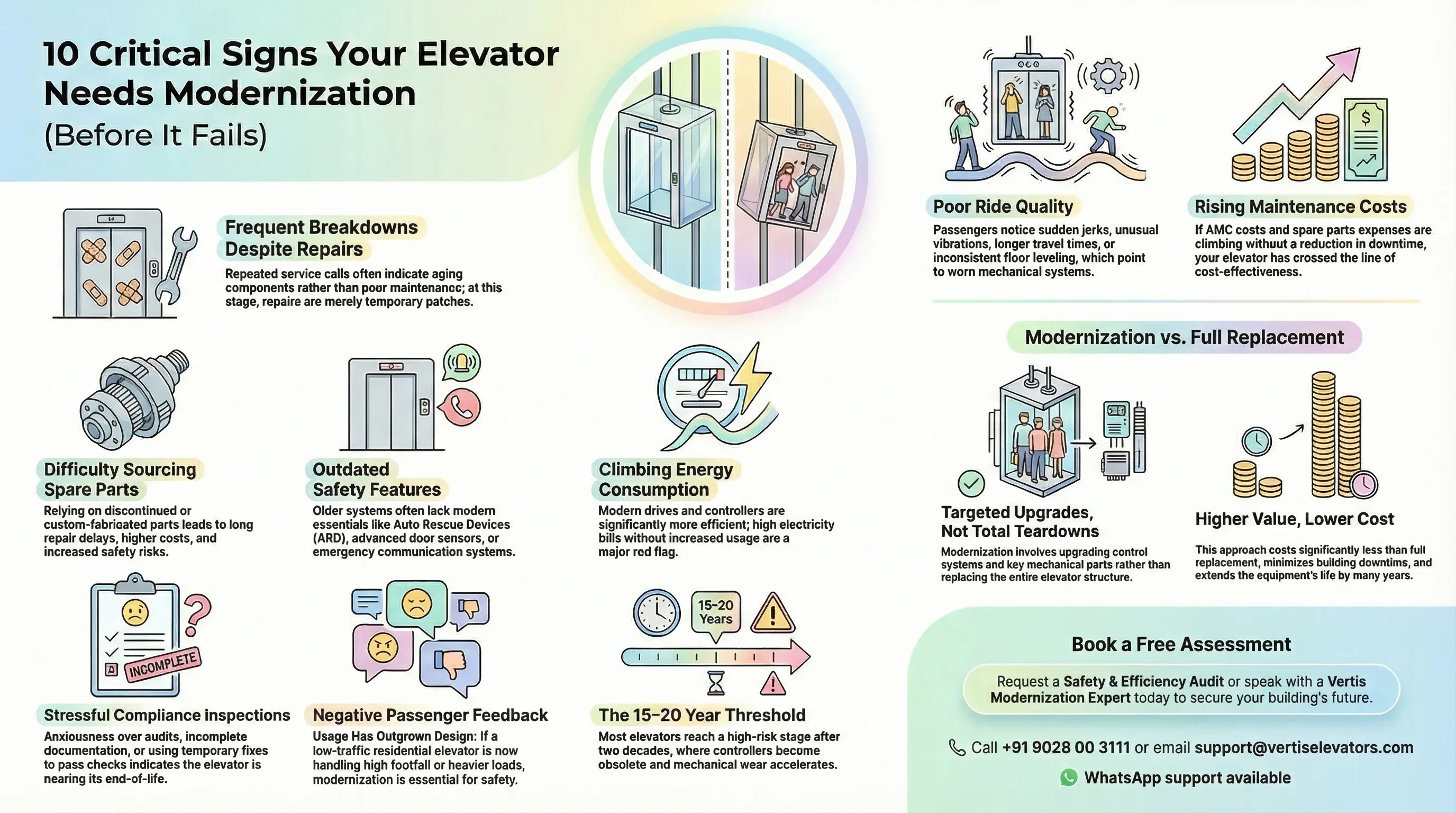
Signs Your Elevator Needs Modernization (Before It Fails)
Elevators rarely fail suddenly. They warn you first — if you know what to look for.
Introduction: The Cost of Waiting Too Long
Most elevator failures don’t come without notice.
They arrive after months or even years of ignored warning signs.
Unfortunately, many building owners and facility managers postpone modernization because:
- “It’s still running.”
- “We’ll fix it when it breaks.”
- “Modernization sounds expensive.”
What they don’t realize is this:
delaying modernization almost always costs more than planning it early.
This guide helps you identify the clear, practical signs that your elevator is approaching the point where maintenance alone is no longer enough.
1. Frequent Breakdowns — Even After Repairs
If your elevator:
- Stops unexpectedly
- Needs repeated service calls
- Works fine for weeks, then fails again
…it’s telling you something.
Repeated breakdowns usually indicate aging components, not poor maintenance. At this stage, repairs become temporary patches instead of real solutions.
Key insight:
When breakdowns become “normal,” modernization is overdue.
2. Slow, Jerky, or Uncomfortable Rides
Passengers notice ride quality long before complete failure.
Watch for:
- Sudden jerks while starting or stopping
- Unusual vibrations
- Longer travel times
- Inconsistent leveling at floors
These symptoms point to worn mechanical systems, outdated controllers, or inefficient drives.
In high-traffic environments like hospitals and malls, poor ride quality directly affects trust and reputation.
3. Rising Maintenance Costs with No Improvement
A major red flag is when:
- AMC costs keep increasing
- Spare parts are frequently replaced
- Downtime doesn’t reduce
This means your elevator has crossed the line where maintenance is no longer cost-effective.
Modernization, though initially planned, often:
- Reduces maintenance frequency
- Lowers energy consumption
- Stabilizes long-term costs
4. Difficulty in Sourcing Spare Parts
Older elevators often rely on:
- Discontinued components
- Custom-fabricated replacements
- Non-standard parts
This leads to:
- Long repair delays
- Higher costs
- Increased safety risks
If your service provider says, “This part is no longer available,” modernization should move from optional to urgent.
5. Safety Features No Longer Meet Current Standards
Safety standards evolve — elevators must evolve with them.
Older systems may lack:
- Auto Rescue Devices (ARD)
- Advanced door sensors
- Emergency communication systems
- Fireman and seismic safety features
Even if your elevator is operational, non-compliance exposes you to legal, insurance, and safety risks.
Modernization ensures alignment with current BIS and global safety norms.
6. Energy Consumption Is Noticeably High
Outdated elevators are often:
- Power-hungry
- Inefficient
- Costly to operate
Modern drives, controllers, and regenerative systems significantly reduce energy usage — especially in commercial and industrial buildings.
If your electricity bills are climbing without increased usage, your elevator could be a silent contributor.
7. Elevator Usage Has Increased Over Time
Buildings evolve.
An elevator originally designed for:
- Low residential traffic
- Light commercial use
May now be handling:
- Higher footfall
- Heavier loads
- Longer operating hours
When usage outgrows design capacity, modernization becomes essential to maintain safety and performance.
8. Compliance Inspections Are Becoming Stressful
If audits or inspections make you anxious because:
- Documentation is incomplete
- Systems barely pass checks
- Temporary fixes are used to meet requirements
…it’s a sign the elevator is nearing the end of its practical lifecycle.
Modernized elevators are easier to certify, document, and insure.
9. Passengers Are Complaining — or Avoiding the Elevator
Complaints about:
- Noise
- Delays
- Unreliable operation
…are not just annoyances — they are early indicators of system fatigue.
In residential societies, this affects quality of life.
In commercial buildings, it affects brand perception.
10. Your Elevator Is Over 15–20 Years Old
Age alone does not mean failure, but it does mean higher risk.
Most elevators cross the modernization threshold between 15 and 20 years, depending on usage and maintenance quality.
At this stage:
- Controllers become obsolete
- Mechanical wear accelerates
- Safety upgrades become unavoidable
Modernization vs Replacement: What Most People Don’t Know
Modernization does not mean replacing the entire elevator.
It often involves:
- Upgrading control systems
- Replacing key mechanical components
- Enhancing safety and efficiency
- Improving ride quality
This approach:
- Costs significantly less than full replacement
- Extends elevator life by many years
- Minimizes downtime
Key Takeaway
Waiting for an elevator to fail is the most expensive modernization strategy.
Early modernization:
- Reduces long-term costs
- Improves safety and comfort
- Ensures compliance
- Protects your building’s reputation
The best time to modernize is before failure forces your hand.
Call to Action
Not sure whether maintenance is still enough; or modernization is due?
- Request a Free Elevator Modernization Assessment
- Get a Safety & Efficiency Audit
- Speak with a Vertis Modernization Expert, today!
Call: +91 9028 zero zero 3111 | WhatsApp Support Available
Email: support@vertiselevators.com
Related Post
Safety Can’t Wait.
Book a free safety audit with Vertis Elevators and ensure your building meets every standard - protecting people and your reputation.
Leave a Comment



Comments (0)
No comments available.