

Modernization vs. Replacement: How to Decide What’s Right for Your Elevator
At some point, every building owner faces the same difficult question:
Should we modernize our existing elevator—or replace it entirely?
It’s a decision that affects:
- Safety
- Capital expenditure
- Downtime
- Compliance
- Long-term operating costs
Yet, many decisions are made based on assumptions, sales pressure, or fear, rather than facts.
This article provides a clear, structured framework to help you decide—confidently and correctly—what your elevator actually needs.
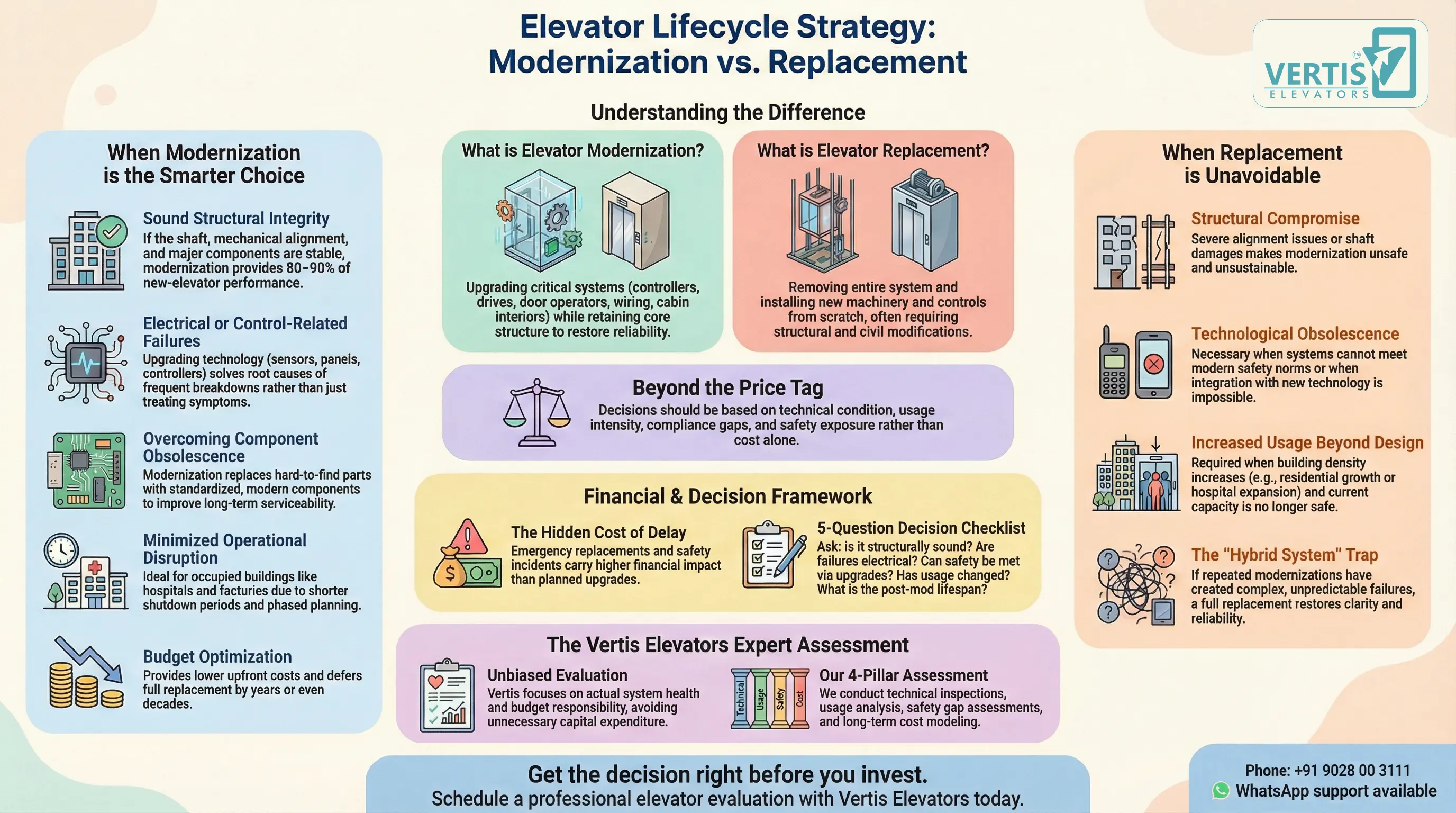
First, Understand the Difference (Clearly)
What Is Elevator Modernization?
Modernization involves upgrading critical systems of an existing elevator while retaining the core structure.
Typically includes:
- Controller and drive upgrades
- Door operator replacement
- Electrical wiring & safety circuits
- Cabin interiors, indicators, and controls
- Communication and monitoring systems
Purpose: Restore reliability, safety, and performance using modern technology.
What Is Elevator Replacement?
Replacement means removing the existing elevator system and installing a new one from scratch.
Typically involves:
- New machinery and control systems
- Structural and civil modifications
- Longer shutdown periods
- Higher capital investment
Purpose: Address systems that are no longer technically or structurally viable.
The Biggest Mistake: Treating This as a Cost-Only Decision
Choosing modernization or replacement purely based on price is risky.
The right choice depends on:
- Technical condition
- Usage intensity
- Compliance gaps
- Long-term building plans
- Safety exposure
Let’s break this down properly.
When Modernization Is the Smarter Choice?
Modernization is usually the right decision if:
1. The Elevator Structure Is Sound
If:
- The shaft is in good condition
- Mechanical alignment is intact
- Major structural components are stable
Then modernization can deliver 80–90% of new-elevator performance at significantly lower cost.
2. Failures Are Mostly Electrical or Control-Related
Frequent issues with:
- Controllers
- Door systems
- Sensors
- Panels
These are ideal candidates for modernization, as technology upgrades solve root causes, not symptoms.
3. Spare Parts Are Becoming Difficult to Source
Obsolete components don’t require full replacement.
Modernization:
- Replaces outdated systems
- Standardizes components
- Improves long-term serviceability
4. You Want Better Performance Without Long Downtime
Modernization:
- Requires less civil work
- Has shorter shutdown periods
- Can be planned in phases
Ideal for hospitals, factories, and occupied buildings.
5. Budget Optimization Matters
Modernization spreads value over time:
- Lower upfront cost
- Improved reliability
- Deferred full replacement by years or decades
When Replacement Becomes Necessary?
Replacement is usually unavoidable if:
1. The Elevator Is Structurally Compromised
If there are:
- Severe alignment issues
- Shaft damage
- Repeated mechanical failures
Modernization alone may not be safe or sustainable.
2. The Elevator Is Technologically Obsolete Beyond Support
If:
- Systems are incompatible with modern safety norms
- No equivalent replacement technology exists
- Integration is impossible
Replacement may be the only compliant solution.
3. Usage Has Increased Beyond Design Capacity
For example:
- Residential building becomes high-density
- Factory adds shifts or heavier loads
- Hospital expands vertically
In such cases, modernization may improve performance, but replacement may be required to meet demand safely.
4. Repeated Modernizations Have Already Been Done
Layering upgrades over decades can create:
- Complex hybrid systems
- Maintenance challenges
- Unpredictable failures
At this stage, replacement often restores clarity and reliability.
Cost Comparison: What Most People Miss?
Replacement costs more upfront, but modernization costs more if done too late.
Key considerations:
- Emergency replacements cost more than planned ones
- Downtime losses are rarely budgeted
- Safety incidents carry hidden financial impact
- Insurance and compliance risks escalate with aging systems
The right timing matters as much as the right choice.
A Simple Decision Framework
Ask these five questions:
- Is the elevator structurally sound?
- Are failures mostly electrical/control-related?
- Can safety standards be met through upgrades?
- Has building usage changed significantly?
- What is the expected lifespan after modernization?
If 3 or more answers favor modernization, replacement may be premature.
Why Expert Assessment Matters?
This decision should never be based on:
- Sales claims alone
- Price comparisons
- Generic recommendations
A proper evaluation requires:
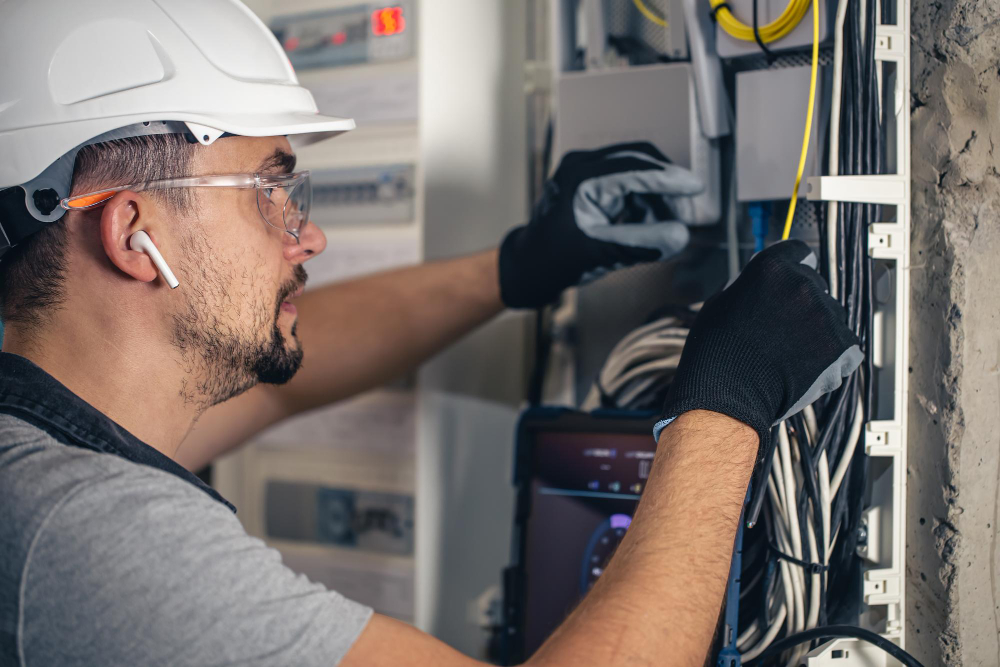
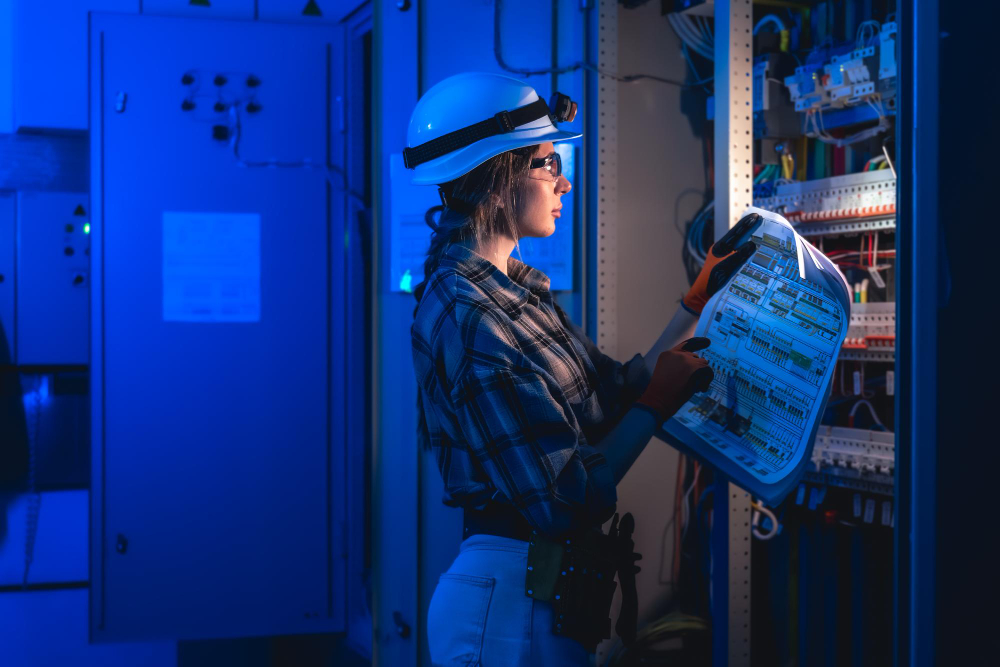
- Technical inspection
- Usage analysis
- Safety gap assessment
- Long-term cost modeling
Without this, both modernization and replacement can become expensive mistakes.
The Vertis Elevators Approach
At Vertis Elevators, we do not push replacement when modernization is viable—and we don’t recommend modernization when safety demands replacement.
Our evaluations focus on:
- Actual system health
- Compliance and safety priorities
- Usage realities
- Budget responsibility
- Long-term reliability
Because the right decision is not the costliest one—it’s the most responsible one.
The Final Words
If you are currently debating modernization vs. replacement, the most cost-effective step is not choosing either—it’s getting the decision right.
Vertis Elevators offers expert, unbiased elevator assessments that help you:
- Identify the safest path forward
- Avoid unnecessary capital expenditure
- Plan upgrades without disruption
- Protect occupants and operations
Before you invest in major upgrades or replacements, speak to experts who understand both.
Schedule a professional elevator evaluation with Vertis Elevators today.
Call: +91 9028 00 3111 | WhatsApp Support Available
Email: support@vertiselevators.com
Related Post
Safety Can’t Wait.
Book a free safety audit with Vertis Elevators and ensure your building meets every standard - protecting people and your reputation.
Leave a Comment



Comments (0)
No comments available.