

Preventive vs Reactive Elevator Maintenance: Which Actually Saves Money?
The real cost of elevator maintenance is not what you pay, it’s what you ignore.
Introduction: The Maintenance Myth Most Buildings Believe
Many building owners and facility managers believe one thing:
“Why spend on maintenance when the elevator is working fine?”
This mindset leads to reactive maintenance, fixing elevators only after something goes wrong. On paper, it looks cheaper. In reality, it is one of the most expensive and risky decisions you can make.
This article breaks down preventive vs reactive elevator maintenance in simple terms; not from theory, but from real-world consequences across factories, hospitals, malls, and housing societies.
What Is Preventive Elevator Maintenance?
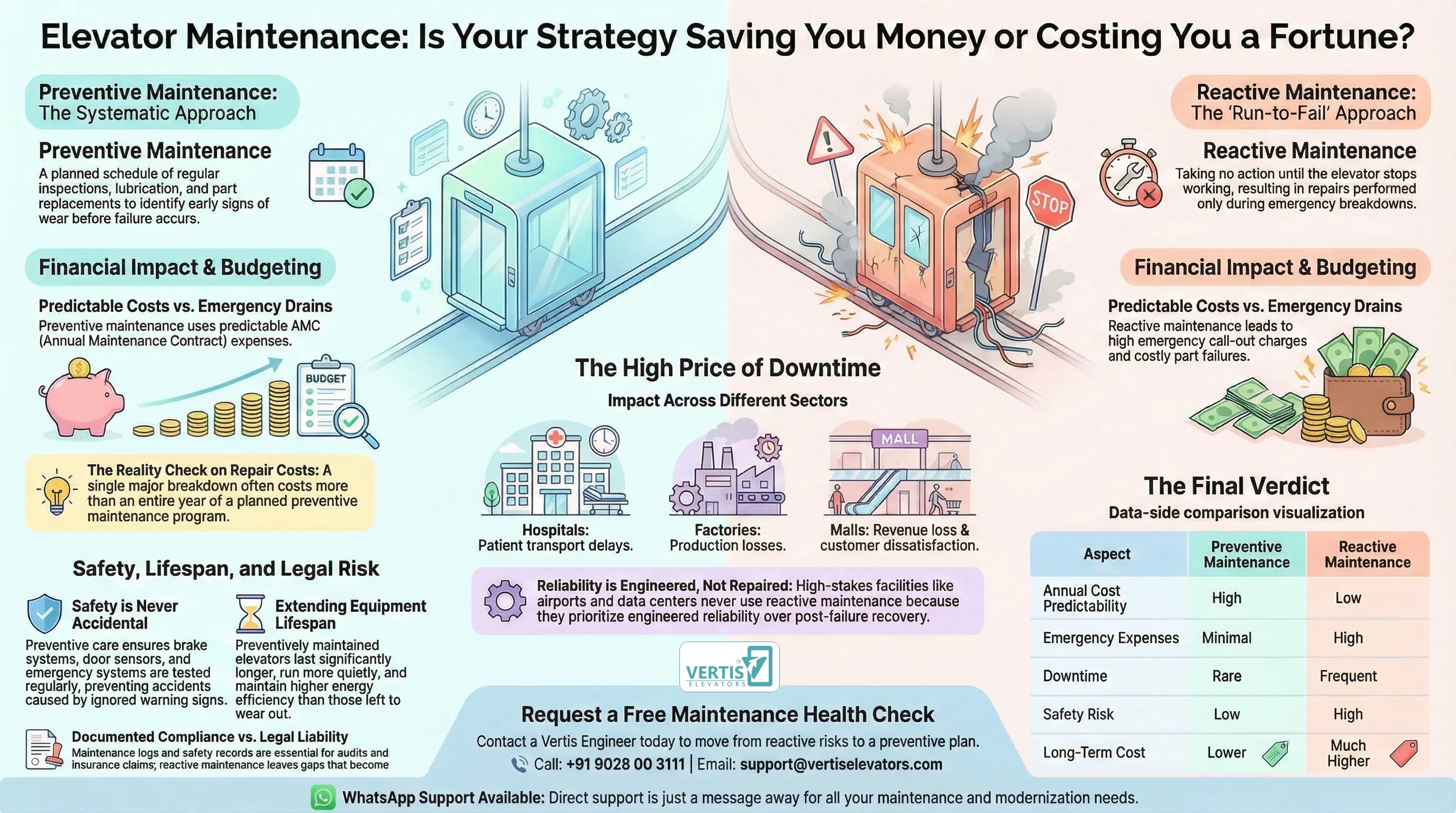
Preventive maintenance is a planned, systematic approach to elevator care.
Instead of waiting for failures, technicians:
- Inspect critical components regularly
- Adjust, lubricate, and calibrate systems
- Identify early signs of wear
- Replace parts before they fail
Think of it like regular health check-ups, small interventions that prevent major emergencies.
What Is Reactive Elevator Maintenance?
Reactive maintenance means:
- No action until the elevator stops working
- Repairs done only after breakdowns
- Emergency calls instead of planned visits
It feels economical initially, but it comes with hidden costs:
- Sudden shutdowns
- Expensive emergency repairs
- Passenger inconvenience
- Safety risks
- Legal and insurance complications
Cost Comparison: What Really Drains Your Budget?
Preventive Maintenance Costs:
- Predictable AMC expenses
- Planned part replacements
- Minimal downtime
- Lower long-term repair costs
Reactive Maintenance Costs:
- Emergency call-out charges
- Costly part failures
- Extended downtime
- Lost business or operational disruption
- Potential injury or liability costs
Reality check:
One major breakdown can cost more than an entire year of preventive maintenance.
Downtime: The Cost Nobody Calculates
Downtime is not just inconvenience; it has measurable impact.
In Different Environments:
- Hospitals: Patient transport delays, safety risks
- Factories: Production losses, logistics disruption
- Malls: Customer dissatisfaction, revenue loss
- Housing Societies: Resident complaints, safety concerns
Preventive maintenance minimizes downtime. Reactive maintenance guarantees it.
Safety: The Biggest Difference of All
Most elevator accidents don’t happen because parts fail suddenly, they happen because warning signs were ignored.
Preventive maintenance ensures:
- Brake systems are tested regularly
- Door sensors remain calibrated
- Emergency systems function when needed
- Safety compliance is continuously maintained
Reactive maintenance discovers problems after safety has already been compromised.
Equipment Lifespan: Repair vs Replace
Elevators maintained preventively:
- Last significantly longer
- Require fewer major overhauls
- Perform more smoothly and quietly
- Maintain energy efficiency
Reactive maintenance accelerates wear and tear, often forcing early modernization or replacement, which could have been avoided.
Compliance, Insurance & Legal Risk
Regulatory inspections and insurance claims demand:
- Maintenance logs
- Safety inspection records
- Proof of compliance
Preventive maintenance provides documented evidence.
Reactive maintenance leaves gaps, and gaps become liabilities during audits, accidents, or claims.
Which Approach Do Professional Facilities Choose?
High-stakes environments never rely on reactive maintenance:
- Hospitals
- Airports
- Data centers
- Large industrial plants
They understand one truth:
Reliability is engineered — not repaired after failure.
So, Which Actually Saves Money?
|
Aspect |
Preventive Maintenance |
Reactive Maintenance |
|
|
Annual Cost Predictability |
High |
Low |
|
|
Emergency Expenses |
Minimal |
High |
|
|
Downtime |
Rare |
Frequent |
|
|
Safety Risk |
Low |
High |
|
|
Long-Term Cost |
Lower |
Much Higher |
|
Verdict: Preventive maintenance is not an expense, it’s a cost-control strategy.
Key Takeaway
Reactive maintenance saves money only until the first major breakdown.
Preventive maintenance saves:
- Money
- Time
- Reputation
- Safety
- Peace of mind
In elevators, prevention is always cheaper than recovery.
Call to Action
Not sure which maintenance approach your elevators are currently on?
- Request a Free Maintenance Health Check
- Get a Preventive Maintenance Plan
- Talk to a Vertis Engineer Today
Call: +91 9028 zero zero 3111 | WhatsApp Support Available
Email: support@vertiselevators.com
Related Post
Safety Can’t Wait.
Book a free safety audit with Vertis Elevators and ensure your building meets every standard - protecting people and your reputation.
Leave a Comment



Comments (0)
No comments available.