

Energy-Efficient Elevator Upgrades: Cut Costs with Smarter Vertical Transportation
Energy costs are no longer a background expense—they are a boardroom concern.
For buildings that operate elevators daily, especially factories, hospitals, malls, and housing societies, elevators can account for a significant share of common-area energy consumption. Yet many buildings continue running outdated systems that quietly waste power every day.
The good news:
Energy efficiency is one of the most practical and financially sensible reasons to modernize an elevator.
This article explains where elevators consume energy, which upgrades deliver real savings, and how energy-efficient modernization improves both operating costs and long-term reliability.
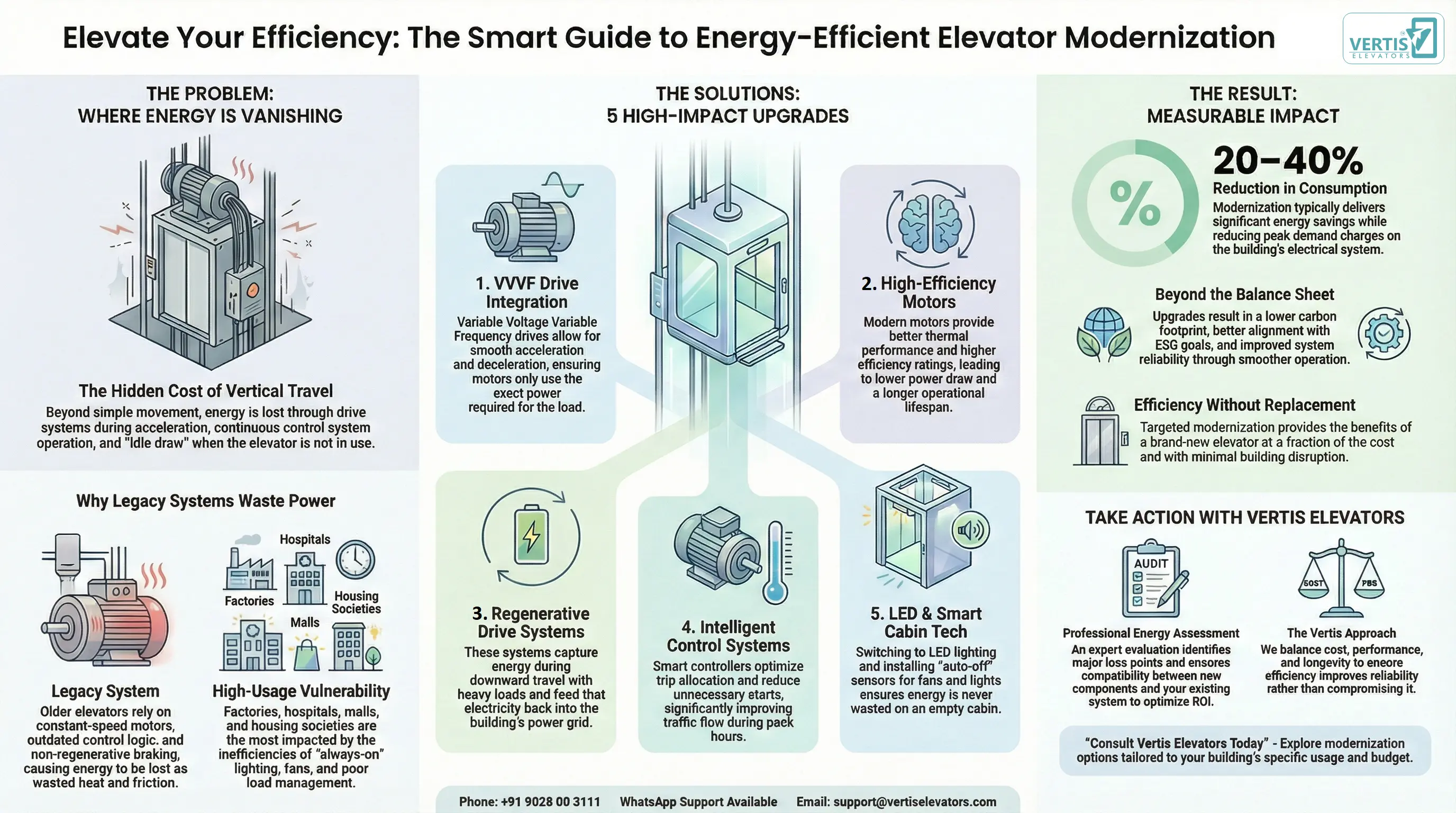
How Elevators Consume Energy? (Beyond What Most People See)
Elevator energy use is not limited to movement alone. Power is consumed through:
- Drive systems during acceleration and braking
- Motors operating under inefficient load conditions
- Control systems running continuously
- Cabin lighting and ventilation
- Idle energy draw when elevators are not in use
In older systems, much of this energy is lost as heat, friction, or inefficiency.
Why Older Elevators Waste More Power?
Legacy elevators were designed at a time when:
- Energy costs were lower
- Efficiency regulations were minimal
- Technology options were limited
Common inefficiencies include:
- Constant-speed motors
- Outdated control logic
- Poor load management
- Non-regenerative braking
- Always-on lighting and fans
The result: higher electricity bills with no added performance benefit.
High-Impact Energy-Efficient Elevator Upgrades
Not all upgrades deliver equal value. The following improvements provide measurable, long-term savings.
1. Variable Voltage Variable Frequency (VVVF) Drives
VVVF drives allow elevators to:
- Accelerate and decelerate smoothly
- Operate motors only at required power levels
- Reduce peak energy demand
Impact:
- Lower energy consumption
- Improved ride comfort
- Reduced mechanical stress
2. Regenerative Drive Systems
When elevators move with load assistance (e.g., downward travel with heavy load), regenerative drives:
- Convert excess energy into usable electricity
- Feed power back into the building grid
Impact:
- Significant energy recovery
- Lower net electricity consumption
- Particularly effective in high-traffic buildings
3. Energy-Efficient Motors
Modern motors offer:
- Higher efficiency ratings
- Better thermal performance
- Lower power losses
Impact:
- Reduced energy draw
- Longer motor lifespan
- Lower maintenance stress
4. Intelligent Control Systems
Smart controllers:
- Optimize trip allocation
- Reduce unnecessary starts
- Improve traffic handling efficiency
Impact:
- Lower power usage during peak hours
- Reduced waiting times
- Improved operational flow
5. LED Cabin Lighting & Smart Ventilation
Simple but effective upgrades:
- LED lighting consumes a fraction of traditional lighting
- Auto-off fans and lights during idle periods
Impact:
- Continuous energy savings
- Reduced heat generation
- Improved passenger comfort
What Energy Savings Look Like in Real Terms?
While exact savings vary by usage and building type, energy-efficient modernization can deliver:
- 20–40% reduction in elevator energy consumption
- Lower peak demand charges
- Reduced stress on electrical systems
- Improved sustainability ratings
For high-usage buildings, savings accumulate significantly year after year.
Energy Efficiency Is Not Just About Cost
Beyond lower bills, energy-efficient elevators offer:
- Lower carbon footprint
- Better alignment with ESG goals
- Improved system reliability
- Reduced wear due to smoother operation
- Future-ready compliance with evolving regulations
Efficiency upgrades improve both economics and responsibility.
Modernization vs. Replacement: Energy Perspective
In many cases:
- Energy-efficient modernization delivers most benefits of a new elevator
- At a fraction of replacement cost
- With minimal disruption
Replacement is not always required to achieve energy gains—targeted upgrades often suffice.
Why Professional Assessment Matters?
Installing energy-efficient components without system evaluation can:
- Create compatibility issues
- Reduce expected savings
- Increase maintenance complexity
A proper assessment ensures:
- Correct upgrade selection
- Optimized ROI
- Safe system integration
The Vertis Elevators Approach
At Vertis Elevators, energy efficiency is approached as part of system health, not as an isolated upgrade.
Our process focuses on:
- Identifying major energy loss points
- Selecting upgrades that deliver real savings
- Ensuring safety and compliance
- Balancing cost, performance, and longevity
Because efficiency should improve reliability, not compromise it.
Professional Call to Action
If your elevator is:
- Consuming more power than expected
- Operating on outdated systems
- Due for modernization
An expert energy assessment can reveal where savings are being lost—and how to recover them responsibly.
Vertis Elevators offers professional evaluations to help buildings reduce operating costs through safe, intelligent elevator upgrades.
Consult Vertis Elevators to explore energy-efficient modernization options tailored to your building’s usage and budget.
Call: +91 9028 zero zero 3111 | WhatsApp Support Available
Email: support@vertiselevators.com
Related Post
Safety Can’t Wait.
Book a free safety audit with Vertis Elevators and ensure your building meets every standard - protecting people and your reputation.
Leave a Comment



Comments (0)
No comments available.