

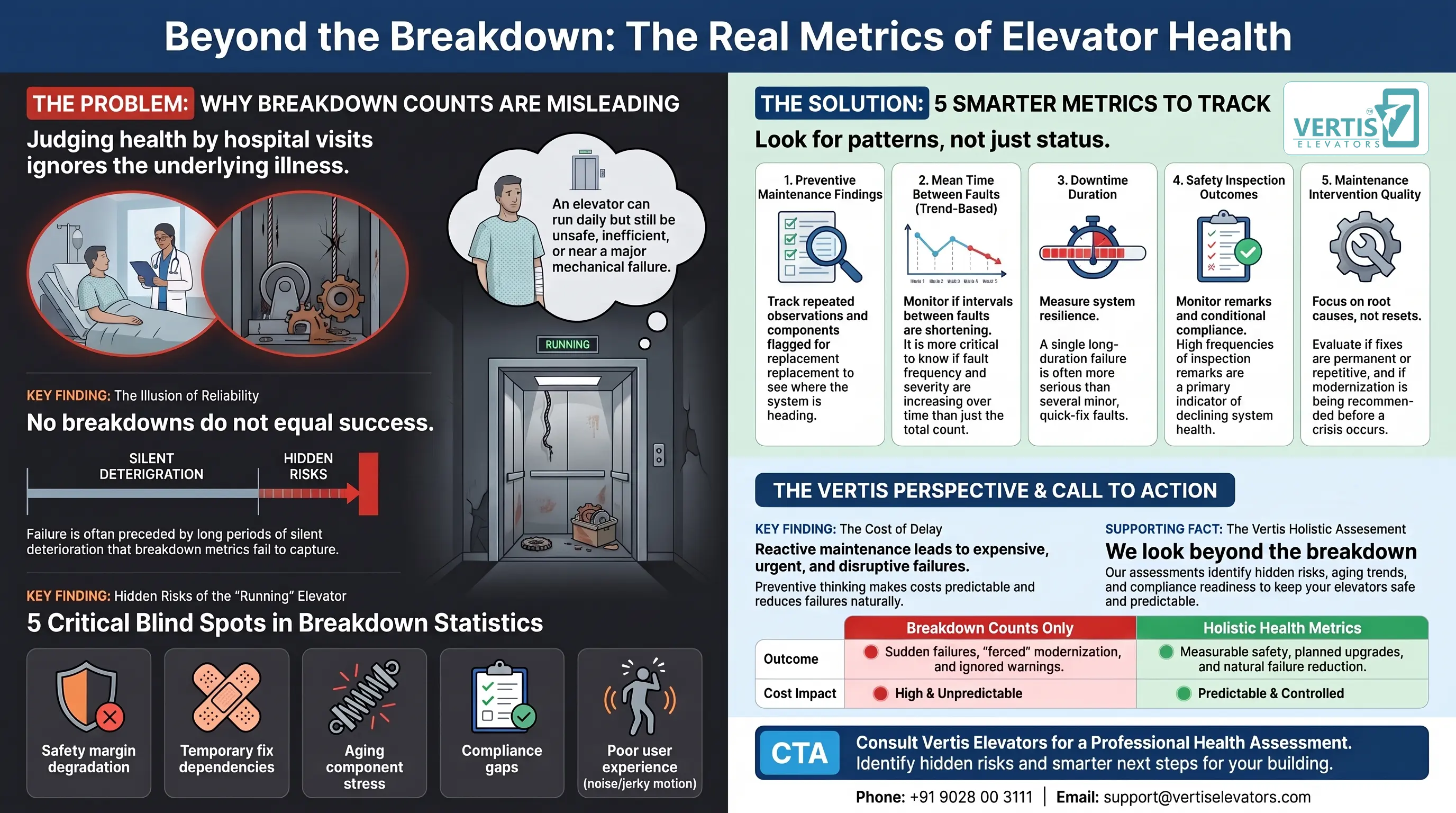
How Scheduled Maintenance Prevents Emergency Elevator Shutdowns & Revenue Loss
Emergency elevator shutdowns rarely happen without warning.
They happen when small, predictable issues are allowed to accumulate unchecked.
For factories, hospitals, commercial complexes, and large housing societies, an unexpected elevator shutdown is not just an inconvenience, it can cause:
- Operational disruption
- Revenue loss
- Safety risks
- Reputation damage
This article explains how scheduled maintenance prevents emergency shutdowns, why reactive servicing increases risk, and how disciplined planning protects both operations and budgets.
What Is Scheduled Elevator Maintenance?
Scheduled maintenance is a structured, preventive approach where servicing is planned based on:
- Usage patterns
- Component wear cycles
- Safety requirements
- Historical performance data
Unlike reactive servicing, it focuses on prevention, not recovery.
Why Emergency Shutdowns Are So Costly?
1. Immediate Operational Impact
Emergency shutdowns can:
- Halt production flow in factories
- Delay patient movement in hospitals
- Disrupt tenant operations
- Create daily inconvenience in residential buildings
The cost is often indirect but significant.
2. Higher Repair Costs
Emergency repairs typically involve:
- Urgent call-outs
- Overtime labour
- Express procurement of parts
- Temporary workarounds
These costs are almost always higher than planned interventions.
3. Extended Downtime
When failures are unplanned:
- Diagnostics take longer
- Spare parts may not be readily available
- Multiple components may fail together
What could have been a short maintenance window turns into days of downtime.
4. Safety & Compliance Exposure
Sudden shutdowns often attract:
- Inspection scrutiny
- Incident reporting
- Regulatory attention
Inconsistent maintenance history weakens compliance posture.
How Scheduled Maintenance Prevents These Scenarios?
1. Early Detection of Wear
Scheduled inspections identify:
- Gradual component deterioration
- Electrical stress
- Mechanical misalignment
Problems are addressed before they escalate.
2. Planned Replacement Instead of Failure Repair
Replacing components at the right time:
- Costs less
- Takes less time
- Avoids collateral damage
Failure-based replacement is always more disruptive.
3. Predictable Downtime
Planned maintenance:
- Can be scheduled during low-usage hours
- Minimizes occupant disruption
- Allows coordination with building operations
Predictability protects productivity.
4. Improved System Reliability
Regular servicing maintains:
- Optimal performance parameters
- Stable safety margins
- Consistent ride quality
Reliability becomes the norm, not the exception.
5. Better Budget Control
Scheduled maintenance:
- Spreads costs evenly
- Reduces surprise expenses
- Allows financial planning
This is especially important for large buildings and societies.
Why Reactive Servicing Increases Shutdown Risk?
Reactive approaches often:
- Ignore early warnings
- Encourage temporary fixes
- Delay modernization decisions
- Normalize degraded performance
Over time, failures cluster—resulting in sudden, unavoidable shutdowns.
Scheduled Maintenance vs. “Routine Visits”
Not all scheduled visits are equal.
Effective scheduled maintenance includes:
- Structured checklists
- Component-specific evaluation
- Trend tracking
- Documented observations
- Clear recommendations
Without structure, schedules lose value.
When Scheduled Maintenance Is No Longer Enough?
Maintenance alone cannot overcome:
- Obsolete technology
- Repeated component fatigue
- Rising safety gaps
In such cases, scheduled maintenance should trigger:
- Modernization planning
- Risk reduction strategies
Ignoring this transition increases shutdown probability.
The Vertis Elevators Approach
At Vertis Elevators, scheduled maintenance is treated as a risk prevention system, not a routine obligation.
Our programs focus on:
- Preventing emergency failures
- Minimizing downtime
- Protecting safety and compliance
- Supporting long-term reliability
- Enabling timely modernization decisions
Because emergencies should be rare, not routine.
The Final Words
If your building:
- Has faced unexpected elevator shutdowns
- Relies heavily on reactive servicing
- Experiences rising emergency repair costs
- Operates high-traffic elevators
It’s time to shift from reactive response to preventive control.
Vertis Elevators offers structured maintenance programs and professional assessments designed to prevent emergency shutdowns and protect operational continuity.
Consult Vertis Elevators today to implement a scheduled maintenance strategy that safeguards safety, uptime, and long-term value.
Call: +91 9028 00 3111 | WhatsApp Support Available
Email: support@vertiselevators.com
Related Post
Safety Can’t Wait.
Book a free safety audit with Vertis Elevators and ensure your building meets every standard - protecting people and your reputation.
Leave a Comment



Comments (0)
No comments available.