

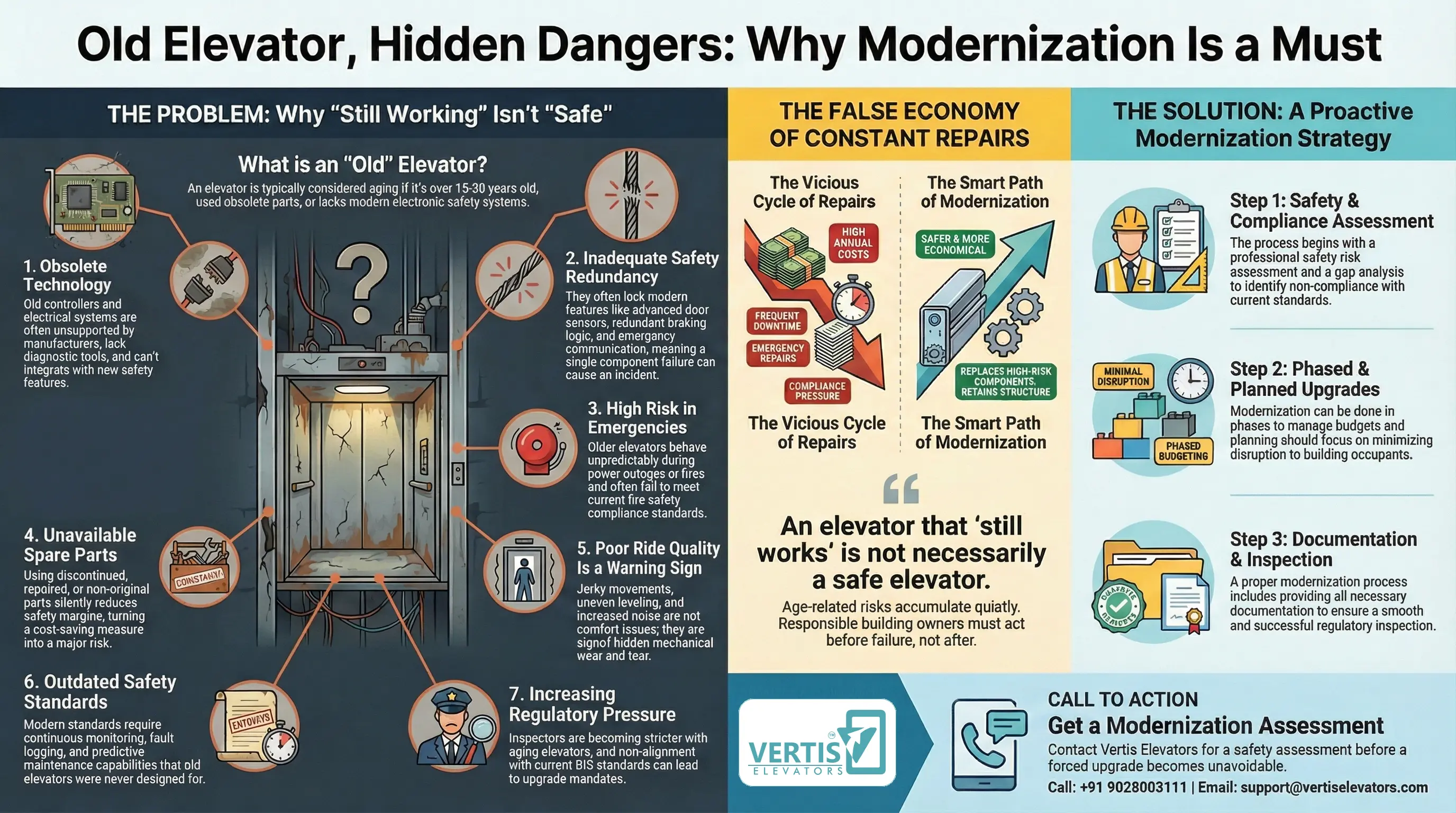
Why Old Elevators Are a Safety Risk (Even If They Still Work)
Why Old Elevators Are a Safety Risk (Even If They Still Work)
One of the most common statements elevator professionals hear is: “The lift is old, but it still works.”
While this may sound reassuring, it is also one of the most dangerous assumptions in building safety. Elevators do not fail like lights or fans — they often operate normally until they don’t.
In many cases, serious elevator incidents are traced back not to sudden failure, but to aging systems that were never upgraded.
This article explains why old elevators pose safety risks, even when they appear functional, and what responsible building owners should consider.
What Is Considered an “Old” Elevator?
An elevator is typically considered aging when it:
- Is 15–20 years old or more
- Uses discontinued or obsolete components
- Lacks modern electronic safety systems
- Requires frequent minor repairs
Age alone is not the problem — the issue is outdated safety design.
Why Old Elevators Keep Working (Until They Don’t)
Older elevators were built with:
- Mechanical relays
- Minimal electronic monitoring
- Fewer safety redundancies
They can continue operating for years, masking hidden risks such as:
- Worn braking systems
- Fatigued wiring
- Unpredictable controller behavior
Modern elevators are designed to detect problems early. Older ones are not.
1. Obsolete Controllers & Electrical Systems
Many older elevators run on control systems that:
- Are no longer supported by manufacturers
- Lack diagnostic capability
- Cannot integrate with modern safety systems
When these systems fail, repairs are often:
- Delayed due to part unavailability
- Temporary or improvised
- Expensive and repetitive
Repeated electrical repairs are often a sign that modernization will cost less in the long run.
2. Inadequate Safety Redundancy
Older elevators may lack:
- Advanced door sensors
- Emergency communication systems
- Redundant braking logic
- Load monitoring
This means a single component failure can create a safety incident. Modern standards assume failures will happen and are designed to respond safely.
3. Increased Risk During Fire & Power Failures
Old elevators often:
- Lack proper fire recall integration
- Behave unpredictably during power outages
- Do not meet current Fire NOC expectations
In emergencies, predictability matters more than functionality.
Fire safety compliance is one of the most common reasons inspectors recommend modernization.
4. Spare Parts Availability Becomes a Safety Issue
When spare parts are:
- Discontinued
- Repaired instead of replaced
- Sourced from non-OEM suppliers
Safety margins reduce silently. What starts as a cost-saving decision can become a compliance and safety risk.
5. Ride Quality Degradation Signals Hidden Wear
Common symptoms include:
- Jerky movement
- Uneven leveling
- Increased noise or vibration
These are not comfort issues — they are mechanical warning signs.
Poor ride quality affects patient safety and operational reliability, not just comfort.
6. Modern Safety Standards Have Changed
Safety expectations today include:
- Continuous system monitoring
- Fault logging and diagnostics
- Predictive maintenance capability
- Enhanced door and brake safety
Older elevators were never designed for these standards, and inspectors increasingly expect alignment.
7. Regulatory Pressure Is Increasing
Across Maharashtra and other states:
- Inspectors are stricter with aging elevators
- Repeated failures trigger upgrade recommendations
- Non-alignment with BIS standards leads to objections
Modernization is often no longer optional — it is enforced safety alignment.
Repair vs Modernization: The False Economy
Continuing to repair an old elevator may seem cheaper, but often results in:
- Higher annual maintenance costs
- Frequent downtime
- Emergency repairs
- Compliance pressure
Modernization replaces high-risk components while retaining usable structure, making it safer and more economical than full replacement.
A modernization assessment provides clarity before forced upgrades become unavoidable.
How Vertis Elevators Approaches Modernization
Vertis Elevators treats modernization as a safety upgrade, not a cosmetic one.
Our approach includes:
- Safety risk assessment
- Compliance gap analysis
- Phased modernization options
- Minimal disruption planning
- Documentation for inspections
We help clients modernize before failure forces the decision.
Final Thought
An elevator that “still works” is not necessarily a safe elevator.
Age-related risks do not announce themselves loudly — they accumulate quietly.
Responsible building owners act before failure, not after.
Call: +91 9028 00 3111 (WhatsApp Support Available)
Email: support@vertiselevators.com
Related Post
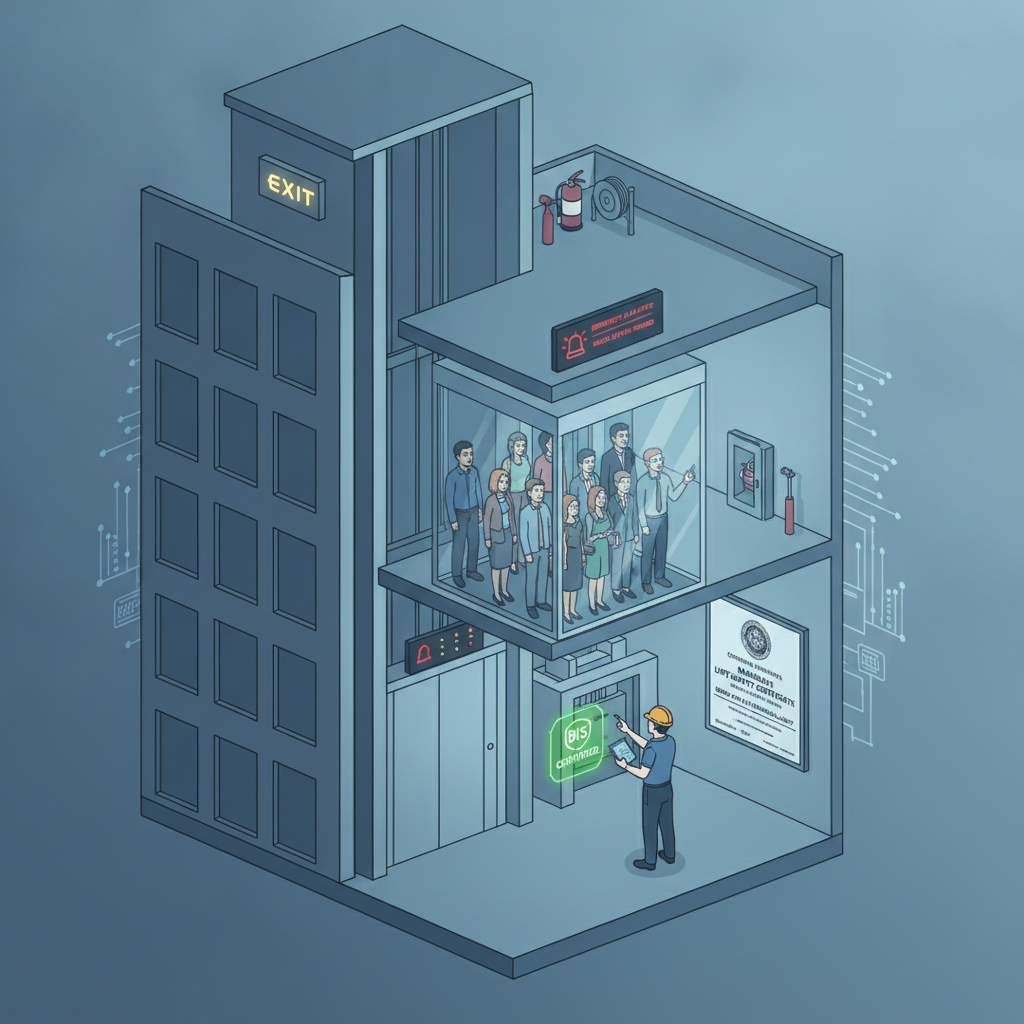
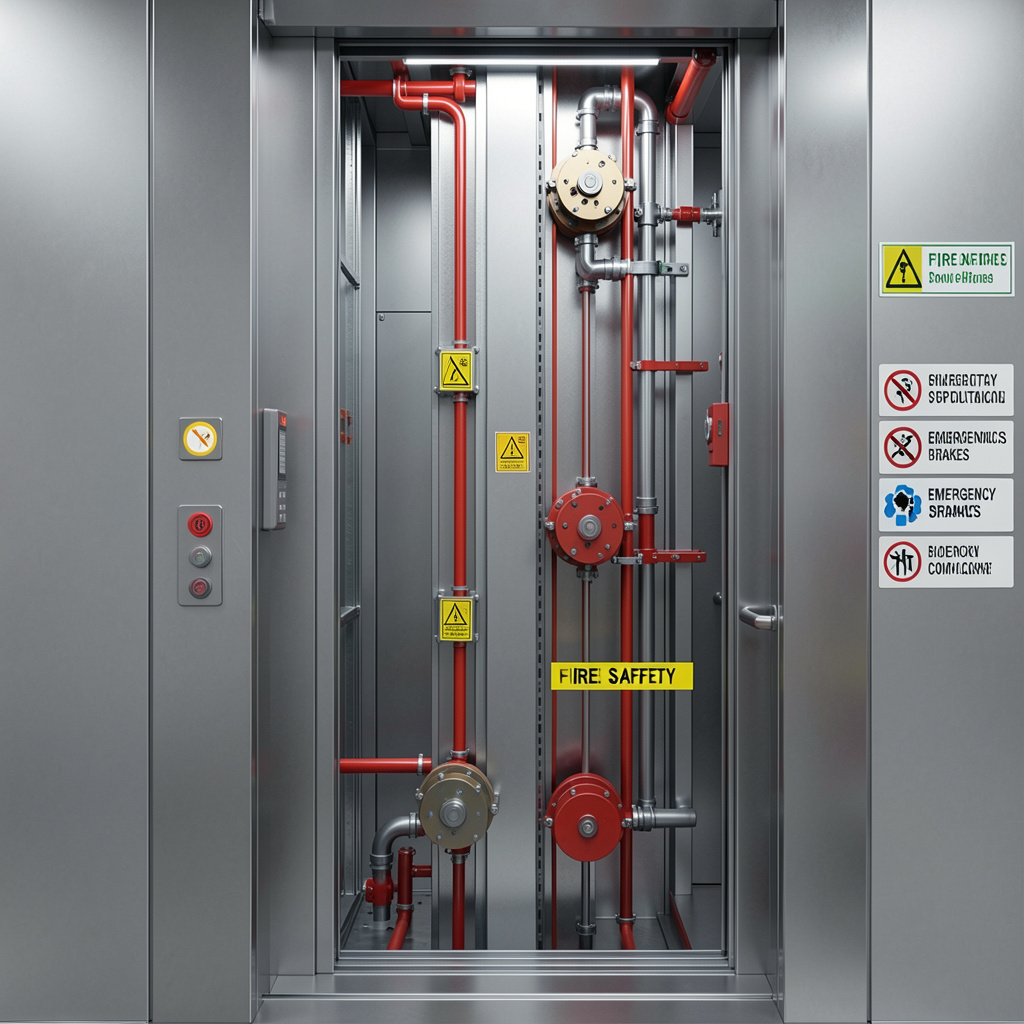

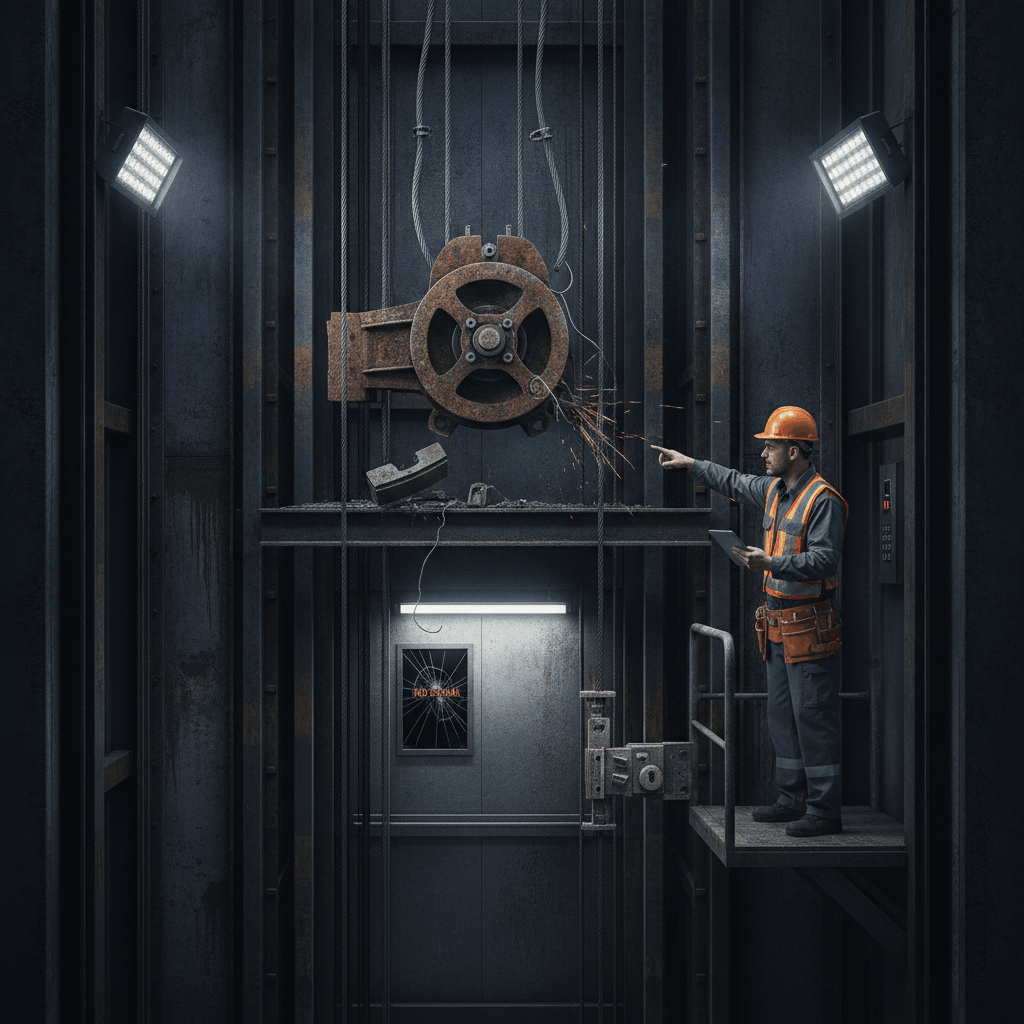
Safety Can’t Wait.
Book a free safety audit with Vertis Elevators and ensure your building meets every standard - protecting people and your reputation.
Leave a Comment



Comments (0)
No comments available.